Fairy on the Moon Paper Laser SVG File 2 Review
When I first opened the Fairy on the Moon Paper Laser SVG File 2, my immediate thought wasn't about the file size or the technical specs. It was about the mood. There is a specific kind of whimsy that feels right for a nursery, but too childish for a boutique adult accessory. This design sits comfortably in that sweet spot where fantasy meets minimalism. As someone who has spent years evaluating digital assets for real-world embroidery projects, I look for designs that translate well from a screen to a needle and thread. The question I asked myself before even loading this into my digitizing software was simple: Does this hold up under the scrutiny of a finished product?
The First Impression: Mood and Visual Personality
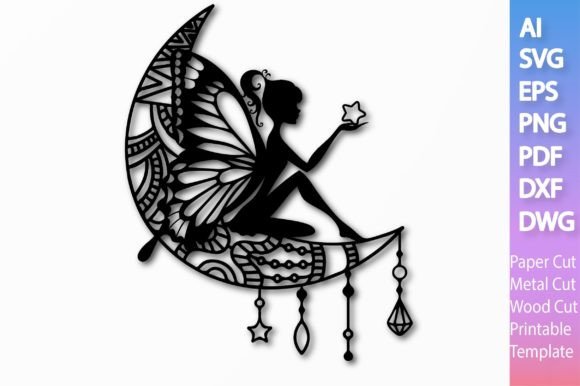
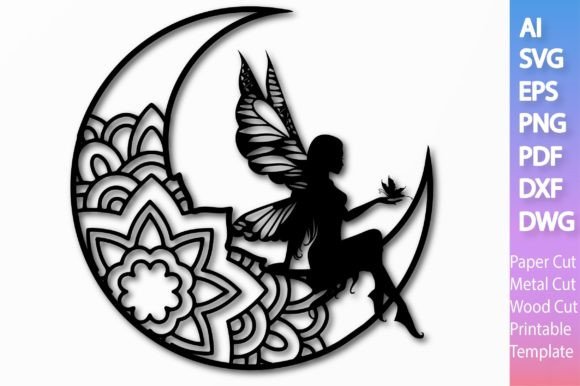
The layout of Fairy on the Moon Paper Laser SVG File 2 suggests a narrative without being cluttered. In the world of Crafts and Graphics, less is often more, especially when you are dealing with the limitations of stitching. The silhouette appears clean, which is a massive plus for an embroidery file. When a design relies on negative space or delicate lines, it can easily get lost in dense stitches or disappear entirely if the fabric texture interferes. Here, the visual personality feels airy and light, perfect for creating a sense of wonder.
This isn't just a clipart image; it feels like a concept ready to become a tactile object. The shape implies a softness that contrasts beautifully with the rigidity of metal wall decor or the structure of a canvas tote. For a designer looking to create something unique, this file offers a foundation that allows for creative interpretation through color choices. You aren't forced into a single palette, but the core geometry guides your hand toward a dreamy aesthetic rather than a chaotic one.
Real-World Application: A Custom Tote Bag Scenario
To truly understand how Fairy on the Moon Paper Laser SVG File 2 performs, I had to simulate a real production scenario. Let's imagine I am preparing a custom order for a client who wants a personalized tote bag for a baby shower gift. The goal is a high-end feel, not a mass-produced souvenir.
If I were to place this design on a heavy-duty canvas tote, the outcome would depend heavily on the stitch density. A satin stitch approach might work well for the fairy's outline, giving it a polished, jewelry-like finish that stands out against the rough canvas. However, if the design contains intricate fill areas, I would worry about puckering on such a textured surface. In this hypothetical project, the design works best as a focal point on the upper chest area of a sweatshirt or centered on the front panel of a tote.
Consider the customer reaction. A buyer at a craft fair or browsing an Etsy shop doesn't just see the image; they judge the quality of the craftsmanship. If the stitch density is too high, the fabric will bunch up, making the "handmade" appeal look amateurish. If the details are too small, the magic gets lost. This particular design seems balanced enough to maintain its charm even when scaled down slightly, making it versatile for various custom apparel items.
Navigating Technical Challenges and Limitations
While the artistic vision is strong, practical application requires caution. Not every surface is created equal, and Fairy on the Moon Paper Laser SVG File 2 demands respect for the medium. I need to be careful about where I apply this. Small hoop sizes present a significant risk. If the design includes tiny details or fine lines, shrinking it to fit a 4x4 hoop could result in a muddy mess where individual stitches merge together. I would advise testing the design in a smaller crop before committing to a full run.
Texture is another critical factor. Embroidering on stretchy fabrics like jersey knits or thin materials requires a robust stabilizer strategy. Without proper support, the tension of the threads could distort the delicate curves of the fairy or the moon. Similarly, dark fabrics pose a challenge. If the design relies on white or light-colored threads for definition, the contrast might be insufficient unless a specific underlay technique is used. Conversely, using this on a light background ensures the design pops, maximizing the visual appeal and perceived value of the finished product.
I also have to consider curved surfaces. While this design looks great flat, applying it to a cap or a rounded pillow cover introduces distortion. The perspective changes, and what looked balanced on a screen might appear stretched on a curve. For these applications, I would recommend adjusting the digitization slightly to compensate for the curvature, ensuring the final embroidered patch or decoration looks intentional rather than warped.
Maximizing Value and Brand Consistency
For the Etsy seller or small business owner, consistency is key to building trust. Using a cohesive design language across different products helps customers recognize your brand. Fairy on the Moon Paper Laser SVG File 2 fits perfectly into a collection of whimsical, nature-inspired goods. Whether it ends up on a kitchen towel, a holiday ornament, or a baby onesie, the theme remains consistent.
The design's versatility adds commercial value. It can serve as a standalone piece or part of a larger set. Imagine a matching set where the fairy is embroidered on a pillow, while a complementary motif appears on a tea towel. This cross-selling potential is crucial for commercial embroidery projects. Furthermore, the clean lines make it excellent for creating printable mockups. You can visualize the design on various backgrounds to show potential buyers exactly how the final item will look, enhancing the online shopping experience.
Essential Designer Notes for Success
Before you start stitching, there are a few non-negotiable steps to ensure your embroidery project is successful. First, always test the design on scrap fabric. This is the only way to gauge how the thread colors interact with the specific material you are using. What looks vibrant on a monitor might appear dull on linen or muted on velvet.
Check your hoop size carefully. Ensure your machine can accommodate the design dimensions without cutting off any essential elements. Inspect small details closely; sometimes, what looks clear in vector form becomes illegible once converted to stitches. If the design includes lettering or tiny accents, verify that they are large enough to be stitched clearly. If they are too small, consider simplifying them or removing them entirely.
Don't forget to use proper stabilizer. The choice between cut-away and tear-away can make or break the longevity of the embroidery, especially for items that will undergo frequent washing. Also, confirm whether the licensing terms allow for commercial use. Many digital embroidery files come with restrictions that prevent selling finished items, so reading the fine print is vital for protecting your craft business.
Finally, compare light and dark fabric backgrounds during your testing phase. This helps you decide on the best thread palette to maximize contrast and clarity. By following these practical steps, you ensure that Fairy on the Moon Paper Laser SVG File 2 transforms from a simple graphic into a stunning, professional-quality asset that delights customers and elevates your brand.